How to Read Stock Charts for Trading Decisions
Stock charts provide a visual representation of market price movements and play a crucial role in making informed trading decisions. Whether you’re a day trader, swing trader, or long-term investor, learning to read stock charts can significantly enhance your market timing and accuracy.
This guide walks you through the fundamentals of interpreting stock charts—types, key elements, indicators, and practical trading applications.
Why Learn to Read Stock Charts?
- Identify market trends and reversals
- Time your entry and exit points
- Spot support and resistance zones
- Validate trade setups with indicators
- Avoid emotional, uninformed trades
1. Types of Stock Charts
✅ Line Chart
- Connects closing prices over time
- Best for viewing long-term trends
- Lacks detail on intraday movement
✅ Bar Chart (OHLC)
- Shows open, high, low, and close
- Good for deeper price action analysis
✅ Candlestick Chart (Most Popular)
- Visualizes OHLC data with colored candles
- Green candle = price closed higher
- Red candle = price closed lower
- Ideal for spotting patterns and price psychology
2. Key Elements of a Stock Chart
- Timeframe (1-min, 5-min, daily, weekly)
- Price axis (Y-axis) = Stock price
- Time axis (X-axis) = Historical time
- Volume bars = Number of shares traded
- Indicators/Overlays = MA, RSI, MACD, etc.
3. Understand Trends
📈 Uptrend
- Higher highs and higher lows
- Bullish market behavior
📉 Downtrend
- Lower highs and lower lows
- Bearish momentum
➡️ Sideways Trend
- Flat movement, range-bound
- Best for breakout strategies
Use trendlines or moving averages to confirm trends.
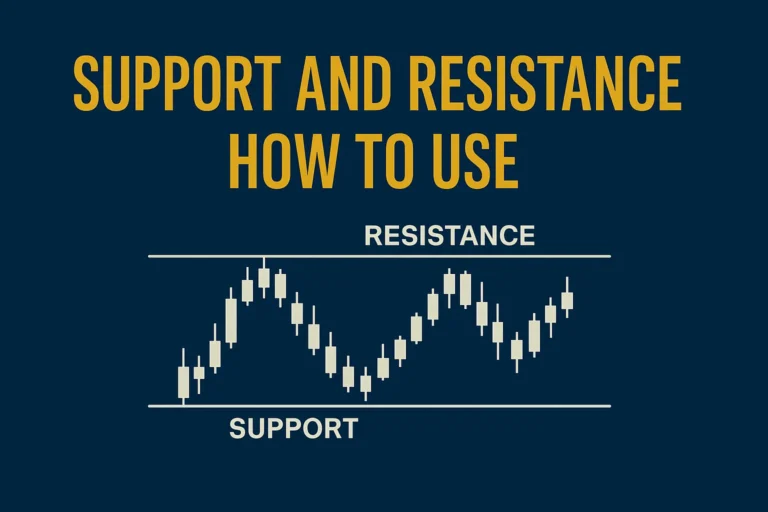
4. Recognize Support and Resistance
- Support: A price level where buying interest is strong enough to prevent further decline
- Resistance: A price level where selling pressure prevents price from rising
How to use:
- Buy near support, sell near resistance
- Watch for breakouts to enter new trends
5. Learn Common Chart Patterns
| Pattern Name | Type | Meaning |
|---|---|---|
| Double Top | Bearish | Trend reversal down |
| Double Bottom | Bullish | Trend reversal up |
| Triangle | Neutral | Continuation or breakout |
| Head & Shoulders | Bearish | Reversal pattern |
| Flags/Pennants | Bullish/Bearish | Continuation of strong move |
These patterns help predict future price moves.
6. Use Technical Indicators
- Moving Averages (SMA, EMA): Trend smoothing
- RSI (Relative Strength Index): Overbought/oversold levels
- MACD (Moving Average Convergence Divergence): Momentum and crossovers
- Bollinger Bands: Volatility zones
- Volume: Strength of a price move
Combine 1–2 indicators with chart patterns for higher success.
7. Match Timeframes to Your Strategy
| Trader Type | Ideal Chart Timeframes |
|---|---|
| Intraday Trader | 1-min, 5-min, 15-min |
| Swing Trader | 1-hr, 4-hr, daily |
| Long-Term Investor | Daily, weekly, monthly |
Use multiple timeframes to confirm trends and avoid false signals.
8. Watch for Confirmations
Don’t act on one signal alone. Look for:
- Candlestick confirmation
- Volume spike
- Trendline breakout or retest
- Indicator agreement
Confirmation boosts accuracy and filters out traps.
Conclusion
Reading stock charts is a skill every trader must master. With a good grasp of chart types, patterns, and indicators, you can analyze price action like a pro and make smarter trading decisions.
Start by observing charts daily, identifying basic patterns, and tracking how price reacts to key levels. Over time, your chart-reading instincts will sharpen—improving your entries, exits, and overall confidence.
FAQs
1. What’s the easiest chart type for beginners?
Candlestick charts are visually intuitive and offer rich information.
2. Can I trade using only charts?
Yes, many traders rely solely on technical charts, but combining with fundamentals can enhance decision-making.
3. What’s the best platform for reading charts?
TradingView, Yahoo Finance, Zerodha Kite, and Investing.com are great options.
4. How do I know if a breakout is real?
Look for confirmation: high volume, candlestick close beyond the level, and no immediate pullback.
5. Are chart patterns always reliable?
No pattern is perfect. Use them with risk management and confirmation for best results.